Last updated 2026-07-24
TL;DR
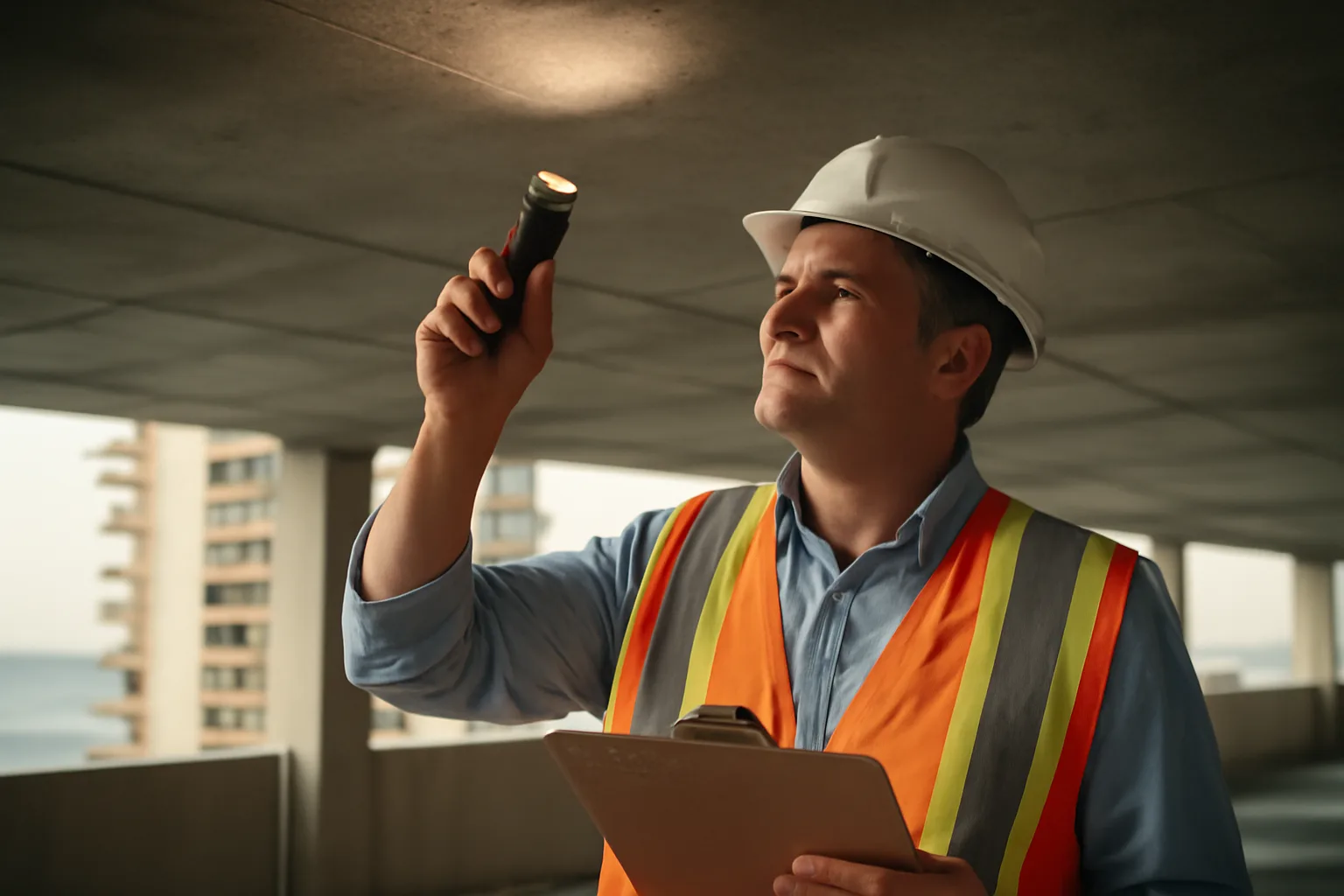
A reserve study company inspects a building's shared components, estimates remaining useful life, and projects how much money an association needs to save each year. Florida condos over 3 stories now must fund reserves per a state-required structural integrity study (SIRS), separate from a voluntary full reserve study. Costs typically run $3,000 to $25,000+ depending on building size and complexity.
What is a reserve study?
A reserve study is a two-part report: a physical inspection of an association's common-area components (roofs, paving, pools, elevators, structural elements) and a financial analysis projecting when each will need repair or replacement and how much that will cost. The output is a funding plan showing what the association should be putting into reserves each year to avoid a special assessment down the road. Most reserve studies follow a format similar to what national bodies like the Community Associations Institute (CAI) and Association Reserves outline: a component inventory, condition assessment, remaining useful life estimate for each item, and a reserve funding plan (either "full funding," "threshold funding," or "baseline funding" models). Florida law doesn't mandate a specific national standard for voluntary reserve studies, but many licensed engineers and reserve specialists in the state use the same methodology. A reserve study is not the same thing as a Milestone Inspection or a Structural Integrity Reserve Study (SIRS), even though people use these terms loosely. Milestone inspections are structural safety reports required at 25 or 30 years depending on coastal location, per Fla. Stat. § 553.899 [1]. A SIRS is a specific reserve study, required under Fla. Stat. § 718.112(2)(g) [1], that covers a defined list of structural and life-safety components. A general reserve study, done voluntarily or by a management company's recommendation, can cover everything from carpeting to clubhouse furniture; a SIRS only covers the items the statute names. For a broader breakdown of how these reports interact, see reserve study.
What is a reserve study for HOA?
For a homeowners association (single-family home HOAs, not condos), a reserve study looks at shared community assets: the clubhouse roof, pool equipment, private roads, retention ponds, gates, and similar common elements the HOA owns and maintains. It does not typically cover individual homes. Florida's HOA reserve rules are lighter than condo rules. Under Fla. Stat. § 720.303(6) [1], reserves are only mandatory if the HOA budget includes them or if a majority of the membership votes to require full funding; otherwise, an HOA can technically operate with no reserve requirement at all, subject to disclosure rules. That's different from condos, where the legislature tightened requirements substantially after the Champlain Towers South collapse in 2021. Many HOA boards commission voluntary reserve studies anyway, because lenders (particularly for buyers using conventional financing on attached-home HOAs) and title companies increasingly ask about reserve funding levels, and because a special assessment sprung on homeowners with no warning is a fast way to get sued or voted out. See hoa-reserve-study for HOA-specific detail.
What is an HOA assessment (and what is an HOA special assessment)?
An HOA assessment is the fee owners pay to the association, usually monthly or quarterly, to fund operating expenses and reserves. It's the HOA equivalent of a mortgage escrow payment; it's mandatory, and it's typically secured by a lien on the property if unpaid. An HOA special assessment is a one-time or short-term extra charge, on top of regular assessments, levied when the association doesn't have enough money on hand for an unexpected or underfunded expense: a roof replacement, storm damage, a failed lift station, or a milestone-inspection-driven repair. Special assessments are legal under Fla. Stat. § 720.303 for HOAs and § 718.116 for condos, but boards generally need to follow notice and, sometimes, membership-vote procedures written into the association's governing documents. The honest reality: special assessments are what happens when reserve studies get ignored or reserves get waived for too many years in a row. A board that skips a reserve study to save $5,000 today can end up needing a $40,000 per-unit special assessment five years later. That's not a hypothetical; it's the exact pattern regulators pointed to after Surfside. For the mechanics of running one, see hoa-special-assessment.
How much should an HOA (or condo) have in reserves?
There's no single dollar figure or percentage that fits every association; the right amount is the total for all components on the reserve schedule minus what's already saved, spread over the years of remaining life for each item. That said, industry benchmarks give a general sense of adequacy. A commonly cited industry metric is the "percent funded" ratio: reserves on hand divided by the theoretical full-funding target, expressed as a percentage. Association Reserves, a national reserve study firm, has published data over multiple years showing the median percent-funded level across the associations it studies typically falls somewhere in the 30% to 70% range, with associations below roughly 30% considered at meaningfully higher risk of a special assessment. There is no single universally agreed "safe" number, and different reserve professionals set different thresholds, so treat any percentage as a rough gauge, not a legal standard. For Florida condominiums specifically, the math changed with the 2022-2024 statutory reforms. Under § 718.112(2)(f) [1], associations can no longer waive or reduce reserve funding for the items covered by a SIRS once that SIRS is completed; full funding based on the SIRS becomes mandatory starting with the turnover budget adopted after the milestone report or SIRS is done. That means the honest answer to "how much should we have in reserves" for a condo over three stories is increasingly "whatever your SIRS says, because the law now requires it," not "whatever percentage feels comfortable." For HOAs, since full reserve funding usually remains optional unless the membership votes it in, the safer benchmark is simply: enough to cover the next 5 years of predictable common-element replacements without a surprise assessment. A reserve study company will hand you that number specifically; guessing at a percentage without one is how boards get blindsided.
How much does a reserve study cost?
| Small HOA, general reserve study | Under 50 homes | $2,500 - $6,000 | |
|---|---|---|---|
| Mid-size condo, general reserve study | 50-150 units | $5,000 - $12,000 | |
| High-rise condo, full SIRS (statutory) | 100+ units, 3+ stories | $10,000 - $25,000+ | |
| Update/refresh (no new site visit) | Any size | $500 - $2,500 | These are general market ranges, not quotes from a specific vendor; get at least two or three bids, because pricing varies a lot by region and by whether a licensed engineer needs to sign off on structural components. Note that a SIRS specifically must be based on a visual inspection performed or supervised by a licensed engineer or architect under § 718.112(2)(g)2 [1], so budget accordingly; a cut-rate "reserve study" that skips the licensed inspection component doesn't satisfy the statute. See reserve-study-for-condo-association for condo-specific cost drivers, including how building age and coastal exposure push the price up. |
Reserve study costs in Florida generally range from about $3,000 for a small HOA with a short component list, up to $15,000 to $25,000 or more for a large high-rise condo with elevators, structural components, and a full SIRS scope. Multi-building associations or those needing a Level I/II SIRS with a licensed engineer's structural review tend toward the higher end. Pricing typically depends on a few factors: number of buildings and units, number of distinct components inventoried, whether it's a desktop update versus a full on-site visual inspection, and whether it must satisfy the specific SIRS component list under § 718.112(2)(g) versus a general voluntary reserve study. Here's a rough cost range by association size and scope: | Association type | Typical size | Approx. cost range |
How do I choose a reserve study company?
Start with licensing. For the structural components a SIRS requires, the visual inspection has to be performed by a licensed engineer or architect, per § 718.112(2)(g) [1]. You can verify an individual's license status through the Florida Department of Business and Professional Regulation (DBPR) license search. A reserve study firm that isn't transparent about who on staff holds the license, or that subcontracts the structural piece to an unnamed third party, is a red flag. Ask for sample reports. A good reserve study is specific: it names each component, gives a useful-life estimate with a stated methodology (more than a guess), and shows year-by-year funding projections, more than a lump total. Vague reports that say "roof: replace eventually" without a dollar figure or year aren't useful for budgeting. Check credentials beyond the engineer license. Many reputable reserve preparers hold the Reserve Specialist (RS) designation from CAI or the Professional Reserve Analyst (PRA) designation from the Association of Professional Reserve Analysts (APRA). Neither is legally required in Florida, but both indicate the preparer follows an established methodology rather than inventing one. Get references from other Florida associations, ideally ones similar in age and construction type. A firm that's done dozens of 1970s coastal high-rises understands things a firm that mostly studies inland HOAs with clubhouses may not, like how salt air affects rebar corrosion timelines.
How does a reserve study differ from a milestone inspection or SIRS?
These three terms get confused constantly, so here's the plain distinction. A Milestone Inspection is a structural safety report, required for condo and cooperative buildings 3 stories or higher, due at 25 years from the certificate of occupancy for buildings within 3 miles of the coast, and 30 years for buildings farther inland, then every 10 years after, under Fla. Stat. § 553.899 [1]. A SIRS (Structural Integrity Reserve Study) is a reserve study focused specifically on the structural and life-safety components the legislature listed: roof, load-bearing walls, primary structural members, floor, foundation, fireproofing/fire protection, plumbing, electrical, waterproofing, and windows/exterior doors, among others, under § 718.112(2)(g) [1]. It must be updated at least every 10 years and is required for condo associations with buildings 3 stories or higher. A general reserve study is broader and voluntary (for HOAs, and for condo components outside the SIRS list). It might cover pool furniture, landscaping equipment, or a clubhouse HVAC unit. None of that is required by the SIRS statute, but a full reserve study can bundle SIRS-required items with everything else so the board only manages one document instead of two. Doing a milestone inspection and a SIRS separately from two different vendors is common and fine, since they serve different statutory purposes, but many engineering firms now offer combined packages because the site visit and much of the documentation overlap. Ask any firm you're considering whether their SIRS quote assumes the milestone inspection is already done or being done concurrently; that changes the price meaningfully.
Are HOA special assessments tax deductible?
Generally, no. For most owner-occupied homes, special assessments (and regular HOA dues) are not deductible on federal income taxes because they're treated as a personal living expense, similar to a homeowner's regular maintenance costs, according to IRS guidance on rental property and home expenses. This applies whether the assessment funds a new roof, a special reserve shortfall, or a milestone-driven structural repair. There are two situations where the tax treatment can differ, and owners should talk to a CPA about their specific case rather than rely on a blog post: First, if the unit is a rental property, a special assessment for repairs and maintenance may be deductible as a rental expense in the year paid, or depreciated over time if it's a capital improvement, under general IRS rules for rental property expenses. Second, if a special assessment is levied specifically to pay for a casualty-loss repair (say, storm damage) and the owner otherwise qualifies for a casualty loss deduction, part of it might factor into that calculation, though casualty loss deductions for personal-use property have been narrowly limited to federally declared disasters since the 2017 tax law changes. Bottom line: don't assume deductibility. Assessments tied to normal wear-and-tear repairs on a primary residence are not deductible; assessments tied to a rental property's operating or capital expenses might be, in whole or in part, depending on how the money was used. A tax professional needs the actual assessment resolution and how funds were spent to give a real answer.
What happens if a Florida condo skips or delays a required reserve study?
Under the current statute, condo associations with buildings 3 stories or higher must complete a SIRS and, once completed, can no longer waive reserve funding for the components it covers, per § 718.112(2)(f)-(g) [1] [1]. Boards that miss the deadline or skip the study altogether expose themselves to a few real consequences. First, liability exposure. Directors have fiduciary duties under Fla. Stat. § 718.111 [1]; ignoring a statutory reserve requirement that leads to deferred maintenance and a later special assessment (or worse, a safety failure) is exactly the kind of decision that invites owner lawsuits and, in serious cases, DBPR complaints. Second, financing and insurance friction. Lenders underwriting condo loans (particularly under Fannie Mae and Freddie Mac condo project guidelines) increasingly ask for SIRS status and reserve funding data before approving loans in a building, and insurers use similar documentation when pricing or renewing coverage. A building without a current SIRS can become harder for owners to sell into, because buyers can't get financing. Third, a bigger bill later. Deferred structural repairs get more expensive, not less, the longer they wait, especially in coastal, salt-air environments where corrosion and water intrusion compound. The legislature's own stated intent behind the SIRS statute, following the 2021 Surfside collapse, was to prevent structural problems from going unfunded and unaddressed for decades. If your association needs help simply staying on top of these deadlines, organizing documents, and keeping the board's calendar straight, a fixed-cost option like the $199 Board Compliance Kit can help track when the SIRS, milestone inspection, and reserve funding deadlines are due; it doesn't replace the licensed engineer's inspection or give legal advice, but it keeps the paperwork from falling through the cracks.
Who actually performs the reserve study inspection?
For general, voluntary reserve studies, no license is legally required in Florida, though most reputable firms employ reserve specialists with CAI's RS credential or APRA's PRA credential, and many use engineers for larger structural components even when not legally mandated. For a statutory SIRS, the visual inspection portion covering structural and life-safety components must be performed by, or under the direct supervision of, a licensed engineer or architect, per § 718.112(2)(g)2 [1]. You can confirm any individual's license status directly through DBPR's online license verification tool, and boards should do that before signing a contract, not after. For a milestone inspection, the same rule applies: it must be performed by a licensed engineer or architect, under § 553.899(3) [1], who then files the report with the local building official. Some firms handle milestone inspections but not reserve studies, and vice versa; ask directly whether the firm you're vetting has performed both scopes on comparable buildings before, and ask to see a completed sample from a Florida association similar to yours.
When should an association update its reserve study?
Florida law requires a SIRS to be updated at least every 10 years for condo buildings 3 stories or higher, under § 718.112(2)(g) [1]. Between formal updates, a lighter "update study" (using existing data plus inflation adjustments rather than a brand-new site visit) is common practice every 3 to 5 years, though the statute doesn't require that cadence for the SIRS itself. Boards should also consider an off-cycle update after any major event: a big storm that damaged the roof or common elements, a large unplanned repair that consumed reserve funds, or a significant capital project (repaving, elevator modernization, envelope work) that changes the remaining useful life of a major component. Waiting the full 10 years without any interim check is a common mistake. Construction costs, insurance costs, and material costs have moved sharply since 2020; a reserve schedule built on 2019 dollar estimates is probably underfunded today, even if the components themselves haven't changed. A quick, lower-cost update study every few years keeps the numbers realistic without paying full price for a brand-new inspection each time.
Frequently asked questions
What is a reserve study?
A reserve study is a professional assessment of an association's shared physical components (roofs, pavement, elevators, structural elements) that estimates each item's remaining useful life and replacement cost, then produces a funding schedule showing how much the association needs to save annually to pay for those replacements without a surprise special assessment.
What is a reserve study for HOA?
For an HOA, a reserve study evaluates community-owned shared assets, like clubhouse buildings, pools, private roads, and common landscaping infrastructure, and projects a savings plan for their eventual repair or replacement. Unlike Florida condos, HOA reserve funding is generally optional under Fla. Stat. § 720.303(6) unless the board budgets for it or members vote to require full funding.
What is an HOA assessment?
An HOA assessment is the recurring fee owners pay the association to cover operating costs and reserve contributions, similar to a mandatory membership fee tied to the property. It's typically billed monthly or quarterly and secured by a lien if unpaid, distinct from a one-time special assessment.
What is an HOA special assessment?
A special assessment is an extra, usually one-time charge an HOA or condo levies on top of regular dues to cover an unexpected or underfunded cost, like storm repair, a failed structural component, or a milestone-inspection-driven fix. Governing documents and Florida Statutes chapters 718 and 720 typically set notice and approval procedures for these charges.
How much should an HOA have in reserves?
There's no fixed dollar figure; the right amount equals the total projected cost of all shared components over their remaining useful life, minus funds already saved. A common industry benchmark is the 'percent funded' ratio, where associations below roughly 30% of full funding face materially higher special-assessment risk, per Association Reserves' published funding studies.
How much does a reserve study cost in Florida?
Costs generally range from about $2,500 to $6,000 for a small HOA, $5,000 to $12,000 for a mid-size condo, and $10,000 to $25,000 or more for a large high-rise condo needing a full statutory SIRS with licensed-engineer structural review. Get multiple bids, since pricing varies by region and scope.
Are HOA special assessments tax deductible?
Generally no, for an owner-occupied primary residence, because the IRS treats them as a personal living expense. If the property is a rental, a portion of the assessment may be deductible as a rental expense or depreciated as a capital improvement; always confirm the specific treatment with a CPA.
What's the difference between a reserve study and a SIRS?
A SIRS (Structural Integrity Reserve Study) is a specific, statutorily required reserve study under Fla. Stat. § 718.112(2)(g) covering a defined list of structural and life-safety components for condo buildings 3+ stories. A general reserve study is broader and can be voluntary, covering non-structural items like pool furniture or clubhouse equipment too.
Who is required to get a SIRS in Florida?
Condominium associations with one or more buildings that are 3 stories or higher in height must complete a SIRS covering the structural components listed in Fla. Stat. § 718.112(2)(g), and update it at least every 10 years. Confirm exact applicability and deadlines with your association's counsel, since building height and use classifications affect the requirement.
Does a reserve study replace the milestone inspection?
No. A milestone inspection, required under Fla. Stat. § 553.899, is a structural safety report due at 25 or 30 years depending on coastal proximity. A SIRS is a reserve-funding document. They cover overlapping structural issues but serve different statutory purposes, and many associations need both, sometimes from the same engineering firm.
Can an HOA or condo waive reserve funding in Florida?
Condo associations can no longer waive or reduce reserve funding for SIRS-covered components once a SIRS is completed, under Fla. Stat. § 718.112(2)(f). HOAs generally retain more flexibility to waive reserves unless the board budgets for them or the membership votes to require full funding, per Fla. Stat. § 720.303(6).
How do I verify a reserve study company or engineer is licensed in Florida?
Use the Florida Department of Business and Professional Regulation's online license verification tool to confirm an individual engineer or architect's active license status before signing a contract. This matters especially for SIRS and milestone inspections, which by statute must involve a licensed engineer or architect's visual inspection.
Sources
- Florida Senate, Florida Statutes § 553.899 (Milestone inspections): Milestone inspection timing (25 years coastal / 30 years inland, every 10 years after) and licensed engineer/architect requirement
- Florida Senate Statutes: Florida law requires condominium associations to maintain reserve funds and conduct structural integrity reserve studies (SIRS).
- Florida Senate Statutes: Florida law establishes milestone inspection requirements for condominium and cooperative buildings.
- Internal Revenue Service: IRS Publication 530 explains that HOA special assessments are generally not tax deductible for homeowners.
- Florida Senate Statutes: Florida law specifies maintenance and reserve obligations for condominium associations under Section 718.113.