Last updated 2026-07-24
TL;DR
Florida condo associations 3+ stories must fund reserves for items covered by a Structural Integrity Reserve Study (SIRS), with no more waiving or pooling those specific components as of the 2024 fiscal year deadline. A reserve study, done by a licensed engineer or architect, sets the funding schedule. Costs typically run $3,000 to $20,000+ depending on building size and study type.
What is a reserve study?
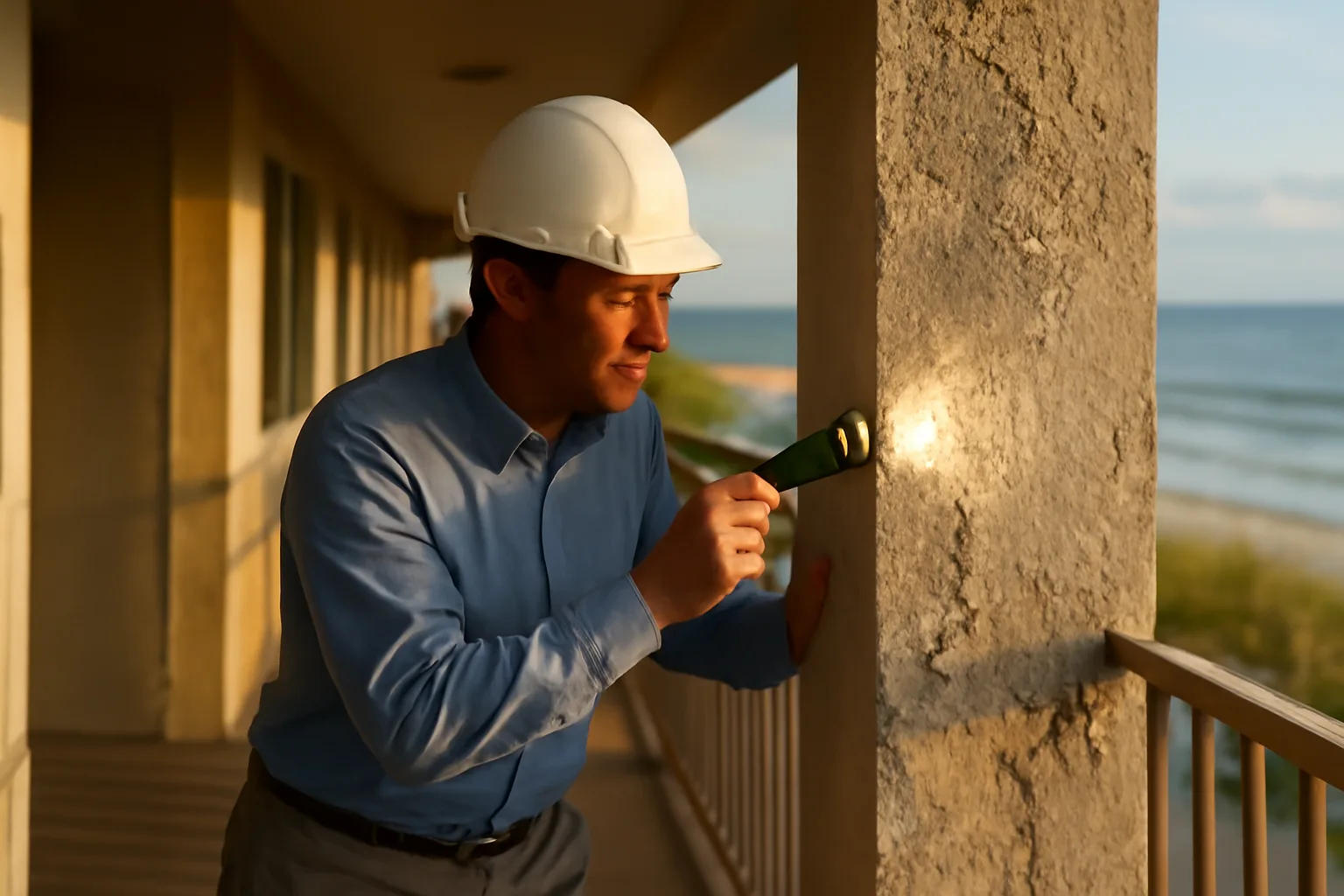
A reserve study is a physical inspection and financial analysis that tells a condo or HOA board how much money it needs to set aside now to pay for big-ticket repairs and replacements later. Think roofs, elevators, pool resurfacing, paving, painting, and (for Florida condos 3+ stories) structural components like the roof, load-bearing walls, floors, foundation, and waterproofing. A standard reserve study has two parts. The physical analysis inventories the building's major common elements, estimates each one's remaining useful life, and prices out replacement. The financial analysis then models how much the association needs to contribute each year so the money is there when the roof actually needs replacing in year 18, not year 25 when it's already leaking into unit 402. In Florida, a specific version of this for condos 3+ stories is called a Structural Integrity Reserve Study (SIRS), created by SB 4-D after the Surfside collapse in 2021. Florida law defines it in Fla. Stat. § 718.112(2)(g), which requires the study to inspect at minimum the roof, load-bearing walls, primary structural members, floor, foundation, fireproofing and fire protection systems, plumbing, electrical systems, and waterproofing and exterior painting [1]. A SIRS must be performed by a licensed engineer or architect, not a generic reserve specialist, per the statute's inspection requirement tied to milestone inspection standards. A reserve study is not optional paperwork. It is the document your board should point to when a unit owner asks why assessments went up, or why the board is proposing a special assessment instead of raising monthly dues gradually. For more on how this fits into your building's broader compliance calendar, see our reserve study guide.
What is a reserve study for an HOA?
For a homeowners association (single-family homes, townhomes, or non-condo communities), a reserve study works the same way structurally, but the legal requirements are different from condos. HOAs in Florida are governed by Chapter 720, not Chapter 718, and Chapter 720 does not currently impose the same mandatory SIRS requirement that applies to condos 3+ stories. That said, many HOA governing documents (the declaration or bylaws) require the board to maintain reserves or commission periodic studies anyway, even without a state mandate. And plenty of HOA boards choose to do a reserve study voluntarily because it's good financial practice: it prevents the classic scenario where a community goes 15 years without touching its clubhouse roof reserve line, then faces a $40,000 special assessment nobody budgeted for. An HOA reserve study typically covers common-area assets: roads, drainage systems, community pools, clubhouses, fencing, playground equipment, and irrigation systems. The scope is set by the association's declaration and by what a reserve professional identifies as a shared, depreciating asset with a finite useful life. If your HOA has a pool or a private road, get that study done. Roads in particular are brutal to fund reactively; resurfacing a half-mile of community road easily runs into six figures. See our HOA reserve study explainer for how to scope one.
How much should an HOA (or condo) have in reserves?
There's no single dollar figure that's right for every association, because the correct reserve balance depends entirely on what your buildings and infrastructure actually need to be replaced and when. A 10-unit condo with a flat roof due for replacement in 3 years needs a very different reserve balance than a 200-unit high-rise with an elevator bank that was just redone. The honest answer: your reserve balance should track the "fully funded" line from your reserve study, meaning the reserve account holds a percentage of the total that, combined with future scheduled contributions, is enough to cover every component's replacement when it comes due, without a scramble. Reserve professionals often talk about a "percent funded" ratio: reserves divided by the fully funded balance. Being 70% funded or higher is generally considered healthy; many older, poorly managed associations run at 15-30% funded, which is a red flag for a looming special assessment. For Florida condominiums 3+ stories, the law now removes the option to underfund or waive reserves specifically for the components a SIRS identifies as structural. As of December 31, 2024, associations must fund those SIRS-covered reserve line items based on the study's findings, with no board or membership vote allowed to waive or reduce them below what the study requires, per amendments to Fla. Stat. § 718.112(2)(f) [1]. Non-SIRS reserve items (things like painting a clubhouse or resurfacing a non-structural walkway) can still potentially be waived by member vote, subject to your documents and current statute language, so confirm the current line-item breakdown with your association's counsel. DBPR, which regulates condominiums through its Division of Florida Condominiums, Timeshares, and Mobile Homes, provides guidance materials on these funding obligations for boards and managers [2].
What are HOA assessments and condo assessments?
An assessment is money the association charges owners, beyond or in addition to routine dues, to cover a specific cost. There are two basic types you'll deal with as a board member: regular assessments and special assessments. A regular assessment is the recurring monthly or quarterly fee every owner pays, which funds day-to-day operations (landscaping, insurance, management fees) and, ideally, feeds the reserve accounts on the funding schedule your reserve study lays out. A special assessment is a one-time (or limited-duration) charge levied when the regular assessment and existing reserves aren't enough to cover a specific cost, usually a large unplanned repair, an insurance deductible after a storm, or a shortfall discovered when a new reserve study or milestone inspection reveals a problem nobody budgeted for. Florida law allows boards to levy special assessments under the authority in the association's declaration and Chapter 718, and requires notice to owners of the amount and purpose, per § 718.112(2)(c) governing board meeting notice for assessments not part of the annual budget [1]. Special assessments are the thing every board wants to avoid, because they land hard and fast on owners who may not have $8,000 or $15,000 sitting around. Full reserve funding, ironically, is the single best tool for avoiding them. If your board is staring down a big number already, our HOA special assessment guide walks through notice requirements and payment plan options, and condo special assessment insurance covers whether insurance products can soften the blow.
How much does a reserve study cost?
| Basic reserve study (non-SIRS) | Roofs, paving, painting, amenities | $3,000 - $8,000 | |
|---|---|---|---|
| SIRS for a small condo (under 50 units) | Structural components per § 718.112(2)(g) | $6,000 - $12,000 | |
| SIRS for a large or high-rise condo | Full structural, MEP, waterproofing scope, possible invasive testing | $12,000 - $25,000+ | These are planning-range estimates, not quotes; get at least two or three bids from licensed engineers or architects who do SIRS work, since pricing varies by region and firm. Boards should not choose the cheapest bid reflexively. A rushed or shallow inspection now can cost far more later if a structural issue gets missed. |
Reserve study costs in Florida vary widely based on building size, number of components inspected, and whether it's a basic reserve study or a full SIRS requiring an engineer's structural inspection. Realistic ranges reported by reserve specialists and engineering firms working in Florida run from roughly $3,000 to $6,000 for a straightforward reserve study on a smaller association, up to $10,000 to $20,000 or more for a full SIRS on a larger high-rise with extensive structural, plumbing, and electrical scope. Several factors push the price up: building height and unit count, number of separate structural components (a building with multiple wings or garages costs more to inspect than a single simple structure), and whether the engineer needs invasive testing (core samples, spalling concrete assessment) versus a visual inspection only. Here's a rough cost comparison to set expectations: | Study type | Typical scope | Approximate cost range |
Are HOA and condo special assessments tax deductible?
For most owners, no. Special assessments paid to a condo or HOA for repairs, reserves, or capital improvements to common areas are generally not deductible on a personal federal tax return, because the IRS treats them similarly to home improvement costs on your own property: not deductible when paid, but potentially added to your cost basis in the unit, which can reduce capital gains tax when you eventually sell. There are narrow exceptions. If part of your unit is used for a qualifying home office or rental purposes, a portion of the assessment tied to that business use may be deductible as a business expense, subject to IRS rules on home office and rental property deductions. If your unit is a rental property, capital improvement-type assessments may be depreciable over time rather than deducted immediately. This is genuinely a tax question, not a condo law question, and the right answer depends on your specific situation (primary residence versus rental, itemizing versus standard deduction, timing). Talk to a CPA or tax preparer before assuming either way. The IRS's guidance on capital improvements and cost basis for rental property, in Publication 527, is a reasonable starting point for owners who rent out their units [3]. IRS Publication 523, which covers how capital improvements adjust the basis of a home you sell, is the relevant reference for owners in a primary residence [4].
What triggers Florida's mandatory reserve and SIRS requirements?
Two Florida laws set the deadlines that matter most to boards right now: milestone inspections and Structural Integrity Reserve Studies, both created or expanded by SB 4-D in 2022 after the Champlain Towers South collapse. Milestone inspections are required for condo and cooperative buildings 3 stories or more in height, at 30 years after the certificate of occupancy (25 years if the building is within 3 miles of the coastline), and every 10 years after that, under Fla. Stat. § 553.899 [5]. This inspection, done by a licensed engineer or architect, is separate from the SIRS but often triggers similar findings, since a structural problem flagged in a milestone inspection will show up in the SIRS financial modeling too. The SIRS requirement, under § 718.112(2)(g), applies to the same population: condominium and cooperative buildings 3 stories or higher. Associations were required to complete their first SIRS by December 31, 2024, and must update it at least every 10 years [1]. Starting with the fiscal year that includes that deadline, boards can no longer vote to waive or reduce reserve funding for the specific components identified in the SIRS. These two requirements work together but aren't identical. A milestone inspection is a one-time structural safety check at a fixed age. A SIRS is a recurring financial planning document. A building can pass its milestone inspection and still have a SIRS that shows it's badly underfunded for a roof replacement coming up in 4 years. Boards need to track both deadlines separately; missing either one exposes the association and, in some cases, individual board members to liability questions, so this is exactly the kind of scheduling problem a Building-Specific Board Compliance Kit is built to solve: it organizes which inspection and funding deadlines apply to your building's age, height, and coastal distance, and keeps the paperwork trail your counsel will want to see.
What happens if a board doesn't fund reserves or skips the SIRS?
Consequences range from financial exposure to potential personal liability questions for board members, though the exact legal exposure depends on facts your association's counsel needs to evaluate, not something a general guide can verdict. Financially, skipping reserve funding just delays the bill. It doesn't cancel it. A board that keeps assessments artificially low by underfunding reserves is setting up the next board (or the same board, a few years later) for a special assessment that could be two, three, or more times larger than what steady funding would have required, because the repair costs and often the underlying damage get worse while the association waits. On the compliance side, Florida's Division of Florida Condominiums, Timeshares, and Mobile Homes under DBPR has authority to investigate complaints and enforce condominium law, and failing to complete a required SIRS or milestone inspection on schedule can draw regulatory attention and complaints from owners [2]. Some associations have also faced difficulty securing property insurance or financing when they can't show a completed milestone inspection or SIRS, since lenders and insurers increasingly ask for this documentation before writing new policies or mortgages in older buildings. Boards worried about a specific building's status should talk to the association's legal counsel and the local building official in their county, since enforcement details and interpretation of "substantial completion" or waiver language can vary by county and by the specific facts of a building's history.
Is there any relief or flexibility for associations struggling to fund reserves?
Yes, to a degree. The Florida legislature has revisited SIRS and reserve rules multiple times since 2022 in response to boards reporting sticker shock over sudden full-funding requirements and steep special assessments. Amendments passed in 2023 and 2024 adjusted deadlines, clarified which components count as "structural" for SIRS purposes, and gave some associations limited additional paths, such as the ability to obtain lender financing or lines of credit specifically to meet reserve obligations without an immediate lump-sum special assessment. Because this area of law keeps moving, don't rely on last year's summary (including parts of this one) as the final word. Confirm the current statute language directly at flsenate.gov and with your association's counsel before making funding decisions or communicating deadlines to owners. Our florida condo reserve fund relief page tracks legislative changes as they happen, which is useful background before a board meeting where owners are going to ask, correctly, whether anything has changed since last year. For a broader overview of how reserve studies fit into general condo association financial planning, see reserve study for condo association.
Frequently asked questions
What is a reserve study?
A reserve study is a professional inspection and financial analysis of a condo or HOA's shared assets (roofs, elevators, structural components, pools) that estimates each item's remaining life and replacement cost, then sets a funding schedule so the association has money ready when repairs come due. Florida condos 3+ stories use a specific version called a SIRS.
What is a reserve study for an HOA?
For an HOA, a reserve study analyzes common-area assets like roads, pools, clubhouses, and drainage systems, estimating when each needs replacement and how much the HOA should be saving now. Florida's Chapter 720 doesn't mandate it the way Chapter 718 mandates SIRS for condos, but many HOA declarations require reserve planning anyway.
What is an HOA assessment?
An HOA assessment is money the association charges owners beyond routine dues. Regular assessments fund ongoing operations and reserves; special assessments are one-time charges for unplanned costs like storm damage, insurance deductibles, or reserve shortfalls discovered during a new study.
How much should an HOA have in reserves?
There's no universal dollar figure; the right amount tracks your reserve study's "fully funded" balance. Being roughly 70% funded or higher is generally considered healthy. Florida condos 3+ stories can no longer waive reserve funding for SIRS-identified structural components as of the 2024 fiscal year deadline.
How much does a reserve study cost?
Basic reserve studies typically run $3,000 to $8,000. A full Structural Integrity Reserve Study (SIRS) for a Florida condo 3+ stories runs roughly $6,000 to $25,000 or more depending on building size, number of structural components, and whether invasive testing is needed. Get multiple bids from licensed engineers or architects.
Are HOA special assessments tax deductible?
Generally no for a primary residence; the IRS treats them like personal home improvement costs, not deductible when paid, though they may add to your cost basis and reduce capital gains tax at sale. Assessments tied to a home office or rental unit may be partially deductible; ask a CPA about your specific situation.
What is the difference between a milestone inspection and a SIRS?
A milestone inspection is a one-time structural safety check required at 30 years after a building's certificate of occupancy (25 years if within 3 miles of the coast), then every 10 years, under Fla. Stat. § 553.899. A SIRS is a recurring financial study that sets reserve funding for structural components under § 718.112(2)(g).
Who is required to do a SIRS in Florida?
Condominium and cooperative associations with buildings 3 stories or higher must complete a Structural Integrity Reserve Study, first due by December 31, 2024 and then updated at least every 10 years, under Fla. Stat. § 718.112(2)(g). The study must be done by a licensed engineer or architect.
Can a condo board waive reserve funding?
Not for SIRS-identified structural components as of the fiscal year including December 31, 2024; the statute removed the waiver option for those specific line items. Non-structural reserve items may still be waivable by member vote depending on your documents and current law, so confirm specifics with your association's counsel.
What happens if my condo association skips its required SIRS?
Consequences can include regulatory complaints handled by DBPR's Division of Florida Condominiums, difficulty obtaining insurance or financing, and larger eventual special assessments since deferred repairs typically get more expensive over time. Specific liability exposure depends on facts your association's attorney needs to evaluate.
How is percent funded calculated for reserves?
Percent funded is the association's current reserve balance divided by the theoretical "fully funded balance," the amount reserves would hold today if every component had been funded proportionally to its used life. A reserve study calculates this figure; above roughly 70% is generally considered financially healthy.
Does Florida law require HOAs (not condos) to have reserve studies?
Not in the same mandatory way condos are required to under Chapter 718. HOAs fall under Chapter 720, which doesn't currently impose the SIRS requirement. Many HOA governing documents still require reserve planning, and doing a voluntary study is common practice to avoid surprise special assessments.
Sources
- Florida Senate, Florida Statutes § 718.112(2)(g): SIRS scope, required components, deadline, and engineer/architect requirement
- Florida DBPR, Division of Florida Condominiums, Timeshares, and Mobile Homes: Regulatory authority over condo reserve and SIRS compliance, guidance for boards
- IRS, Publication 527: Residential Rental Property: Tax treatment of assessments and capital improvements for rental property
- Florida Senate, Florida Statutes § 553.899: Milestone inspection age and interval requirements based on height and coastal proximity
- IRS, Publication 523: Selling Your Home: How capital improvement-type assessments can adjust the cost basis of a primary residence for capital gains purposes