Last updated 2026-07-25
TL;DR
A Florida milestone study is the structural inspection required under Fla. Stat. §553.899 for condo and co-op buildings 3+ stories, due at 25 years (30 if outside 3 miles of the coast) and every 10 years after. It's separate from the SIRS reserve study, though many boards handle both together to save on engineering fees.
What is a milestone study in Florida, exactly
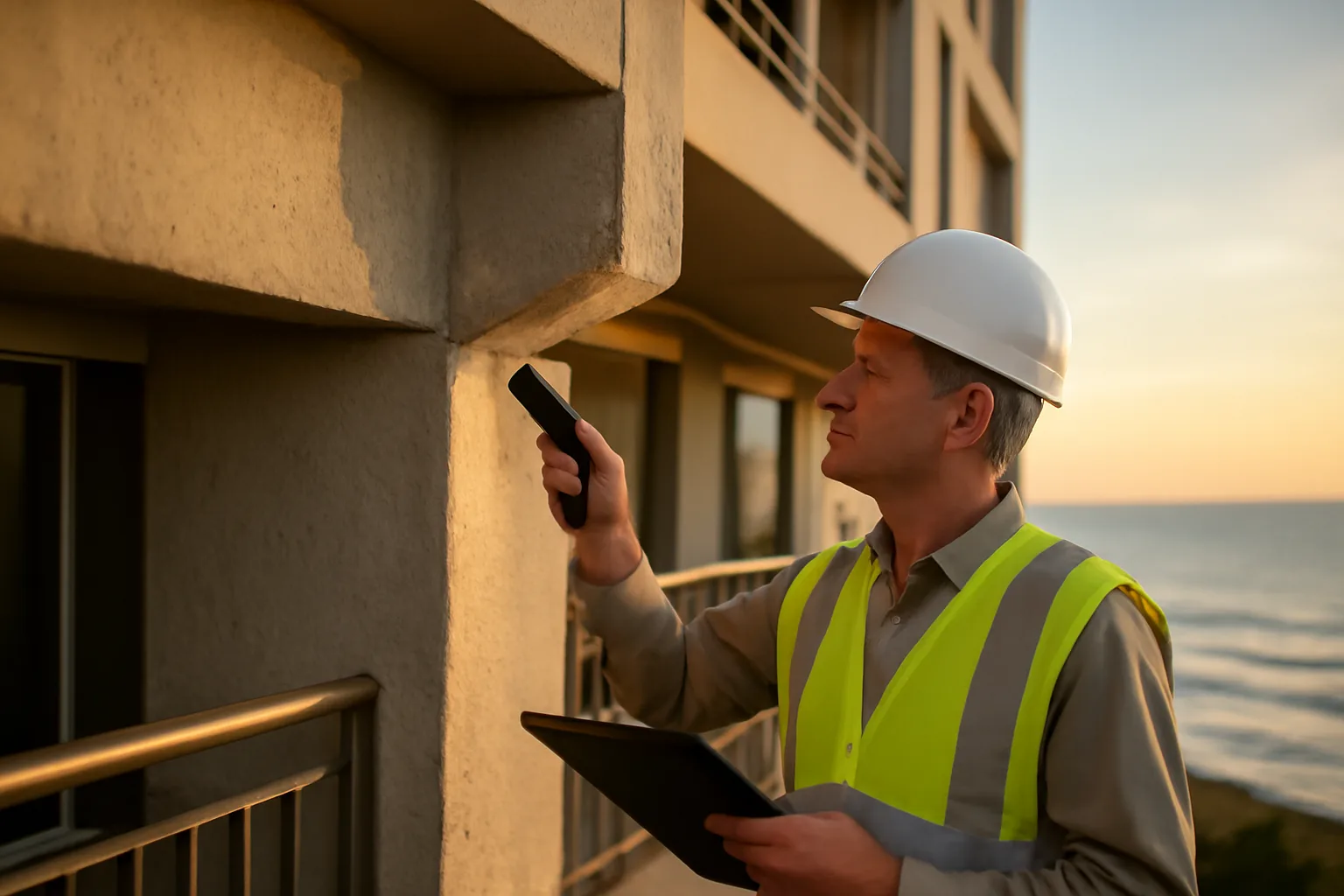
A milestone inspection is a structural safety review performed by a licensed architect or engineer, required by Florida law for condominium and cooperative buildings that are three stories or more in height. The law, Fla. Stat. §553.899, was created in 2022 after the Champlain Towers South collapse in Surfside and amended again in 2023 to clean up deadlines and local government roles [1]. The inspection happens in two phases. Phase one is a visual examination of habitable and non-habitable structural components, looking for signs of substantial structural deterioration. If the inspector finds none, that's the end of it until the next required cycle. If they find something worth a closer look, phase two kicks in: more invasive testing, sometimes destructive (core samples, opening up walls), to figure out the scope of repair needed [1]. This is not the same document as your Structural Integrity Reserve Study (SIRS). The milestone study asks "is the building structurally sound right now." The SIRS asks "how much money do we need to set aside for the next 30 years of upkeep on structural components." Boards often bundle the site visits because the same engineer can gather data for both, but they are legally distinct deliverables under different statute sections.
When is my building's milestone inspection due
Timing depends on your certificate of occupancy date and how close the building sits to the coast. For buildings within three miles of the coastline, phase one is due by December 31 of the year the building turns 25 years old, then every 10 years after that. For buildings more than three miles from the coast, the deadline moves to 30 years old, then every 10 years [1]. If your building got its certificate of occupancy before July 1, 1992, the statute set a one-time catch-up deadline: phase one had to be completed by December 31, 2024, unless the local enforcement agency granted an extension [1]. That deadline has already passed for most buildings, so if yours falls in this bucket and nothing has been filed, that's an urgent conversation with counsel and your building department, not a someday item. Local building officials can require inspections earlier than the statutory schedule if they have reason to believe there's a safety concern. They can also grant extensions of up to 180 days for phase one and additional time for phase two, but you have to ask before the deadline, not after [1].
How much does a milestone inspection cost
There's no single statewide number because pricing depends on building size, height, age, and how much phase two investigation ends up being needed. Reporting from Florida engineering firms and condo associations has put phase one visual inspections commonly in the low tens of thousands of dollars for mid-size buildings, with phase two costs climbing sharply if invasive testing and repair design work is required. The Florida DBPR licenses the architects and engineers who perform this work, and boards should confirm active licensure before signing any contract. A rough way to budget: get at least two licensed engineering firm quotes before your deadline year, not after. Boards that wait until the deadline year to start shopping quotes often end up paying rush pricing or missing the window for phase one entirely, which can trigger local code enforcement action.
How much should an HOA or condo have in reserves
For condominiums under Fla. Stat. §718.112, the reserve requirement depends on whether your building is subject to SIRS. If it is (any condo 3+ stories, per the milestone/SIRS overlap in ch. 718 and ch. 553), reserves for the SIRS-covered components (roof, load-bearing walls, floor, foundation, fireproofing, plumbing, electrical, waterproofing, exterior painting, windows/doors, and any other item with a deferred maintenance expense over $10,000 that affects habitability) must be funded at the level the SIRS study recommends, with no vote allowed to waive or reduce that funding starting with reports due after December 31, 2024 [2]. For components not covered by SIRS, associations can still vote to waive or underfund reserves in many cases, though check your declaration and recent statute amendments, because the legislature has tightened these options more than once since 2022. There's no flat percentage or dollar-per-unit number the state mandates as "the right reserve level." It's whatever your engineer's SIRS study calculates based on remaining useful life and replacement cost of each component. A 40-year-old building with an aging roof and old plumbing will have a much bigger number than a 12-year-old building with the same square footage. This is exactly why generic reserve rules of thumb (like "save 10% of your budget") don't hold up well against Florida's statute-driven approach; the reserve study for condo association requirement is specific to your building's actual components, not a percentage guess.
What is a reserve study, and what is it for
A reserve study is a professional assessment of your association's major shared components (roof, paving, pool, structural elements, painting, plumbing, elevators, etc.), estimating each item's remaining useful life and the cost to repair or replace it. The output is a funding schedule showing how much the association should be setting aside each year so the money is there when the roof or elevator actually needs replacing, instead of hitting owners with a surprise bill. In Florida, the SIRS (Structural Integrity Reserve Study) is a specific statutory version of this for condos and co-ops 3+ stories, defined under Fla. Stat. §718.112(2)(g) and cross-referenced with the milestone inspection statute [2]. A general reserve study for other associations, including most HOAs governed by ch. 720, isn't mandated the same way, but it's still standard best practice and often required by lenders or insurers. A reserve study for an HOA (as opposed to a condo) usually covers similar categories, roofing, paving, amenities, fencing, but Florida's ch. 720 doesn't impose the SIRS mandate on single-family HOAs the way ch. 718 does on condos. HOAs should still get one done, ideally every 3-5 years, because deferred maintenance debt doesn't care what statute chapter you're under.
What is an HOA assessment, and how is it different from a special assessment
An HOA assessment is any charge your association levies on owners to cover operating costs or reserve contributions, usually billed monthly, quarterly, or annually as part of the regular budget. This is the routine fee that covers landscaping, insurance, management, and reserve funding. A special assessment is a separate, often larger, one-time (or limited-duration) charge levied outside the regular budget, typically to cover an unexpected expense, a reserve shortfall, or a big repair the reserves didn't fully cover. Milestone inspection findings and SIRS-driven reserve requirements have been a major driver of special assessments across Florida since 2022, because many older buildings discovered mid-inspection that decades of underfunded reserves left a large gap between what's saved and what's needed. Under Fla. Stat. §718.116, assessments (regular and special) become a lien on the unit if unpaid, and the association has real collection tools including interest and, eventually, foreclosure in some cases [3]. If your board is heading toward a special assessment vote, hoa special assessment covers the notice and voting mechanics in more depth.
Are HOA and condo special assessments tax deductible
Generally, no, not for the individual unit owner's personal residence. The IRS treats regular HOA and condo assessments, and most special assessments, as nondeductible personal expenses, similar to how you can't deduct your own home repair costs. IRS Publication 530 addresses homeowner costs and doesn't list association assessments among deductible items for a personal residence [4]. There are narrow exceptions. If you rent out the unit, assessments related to the rental property (including special assessments for repairs) may be deductible as a rental expense on Schedule E, subject to normal rules distinguishing repairs from capital improvements. If a special assessment funds a capital improvement (like a full roof replacement) rather than a repair, it may need to be capitalized and depreciated rather than deducted immediately, even for rental property. This is genuinely an area where you want a CPA's read on your specific situation rather than a board newsletter's summary, because the repair-versus-improvement line trips people up constantly. Some owners have tried to argue casualty-loss treatment for storm-related special assessments; that's a narrower and more fact-specific claim that also depends on current tax law limits on personal casualty loss deductions. Don't assume it applies without a tax professional confirming for your situation.
How does the milestone study connect to the SIRS reserve requirement
They're run by different statute sections but they feed each other. The milestone inspection (Fla. Stat. §553.899) tells you whether there's structural deterioration right now. The SIRS (Fla. Stat. §718.112) tells you how much money to save for the predictable replacement of major components over time [1] [2]. If your milestone inspection turns up substantial structural deterioration in phase two, that repair cost often needs to get folded into or reconciled against your SIRS funding plan, because the SIRS assumes normal wear and scheduled replacement, not emergency structural repair. Boards that treat these as two completely separate projects, hiring different firms with no coordination, sometimes end up with conflicting timelines and duplicate site visits. Hiring one engineering firm capable of scoping both, or at minimum having them share raw inspection data, usually saves money and prevents contradictory reports. DBPR maintains a public license-verification search for architects and engineers who can legally perform these inspections; checking status before you sign a contract is a five-minute step at the department's online lookup that a lot of boards skip.
What happens if a board misses the milestone inspection deadline
Local building officials enforce the milestone deadline, not the state directly, and enforcement varies by county and city. Consequences can include code enforcement citations, fines, and in more serious cases, the local building official can require the association to submit a plan and timeline for compliance or even restrict occupancy if there's a genuine safety concern [1]. Beyond legal exposure, missing the deadline creates real practical risk: lenders increasingly ask for milestone and SIRS status before approving mortgages in Florida condo buildings, and insurers have gotten more aggressive about requesting proof of structural inspection compliance before renewing coverage. A building that can't show it met its milestone deadline may find financing and insurance both harder and pricier to get, which affects every owner trying to sell or refinance. If your association already missed a deadline, the fix isn't to panic-hire the cheapest engineer available. Call your association's counsel first, then your local building department, to understand what specific remediation path they expect, since this varies by jurisdiction.
What should a board actually do with the milestone report once it's done
The engineer's report isn't the finish line, it's the start of the board's real work. Under the statute, the association has to distribute a summary of the inspector's findings to unit owners and file with the local building official, and if the report identifies substantial structural deterioration, there are specific notice and repair-timeline obligations that follow [1]. Practically, once you have the report, the board needs to: get repair cost estimates for anything flagged, figure out whether reserves cover it or a special assessment is coming, update the SIRS funding plan to reflect any new information, and communicate a real timeline to owners instead of vague reassurance. This is the exact stretch where boards get the most member anger, usually because they under-communicate, not because the repair itself was unreasonable. This is also where a lot of boards realize they don't have a clean system for tracking which deadline applies to which statute section, who's been hired, what's been filed, and what's still outstanding. That's the specific gap the $199 one-time Board Compliance Kit is built to close: it doesn't replace your licensed engineer or your attorney, but it organizes the milestone and SIRS deadlines specific to your building's age and coastal distance, tracks what's been filed, and gives the board a clear document trail for owners and future board members. Nobody wants to be the board that lost track of which phase-two report went where.
How do coastal proximity and building age change my deadline schedule
| Within 3 miles | 25 years old | Every 10 years | |
|---|---|---|---|
| More than 3 miles | 30 years old | Every 10 years | |
| Pre-1992 buildings (any distance) | One-time catch-up | Was due Dec. 31, 2024 [1] | Determining the exact coastal distance for your building isn't always obvious from the street; some boards have had to get a surveyor or the local building department to confirm which side of the three-mile line they fall on, especially for buildings near bays, inlets, or barrier islands where "the coast" isn't a straight line. |
The three-mile coastal line is the single biggest variable in the milestone schedule, and it surprises a lot of boards who assume every building follows the same 30-year rule. Within three miles of the coastline, phase one is due at 25 years from certificate of occupancy. Beyond three miles, you get an extra five years, phase one due at 30 years [1]. After the initial phase one, every building, coastal or not, re-inspects every 10 years going forward. So a coastal building built in 2005 (turning 25 in 2030) would need phase one by December 31, 2030, then again around 2040, 2050, and so on. | Building distance from coast | Phase one due at | Recurring cycle |
Frequently asked questions
What is a reserve study?
A reserve study is a professional evaluation of an association's shared components (roofs, paving, pools, elevators, structural elements) that estimates each item's remaining life and replacement cost, then produces a funding schedule so the association saves enough over time instead of facing surprise special assessments.
What is a reserve study for an HOA?
For an HOA, a reserve study covers common-area components like roofing, paving, fencing, pools, and clubhouses. Florida's ch. 720 doesn't mandate it the way ch. 718 mandates SIRS for condos, but most HOAs still get one every few years to avoid underfunded reserves and surprise assessments.
What is an HOA assessment?
An HOA assessment is the regular fee (monthly, quarterly, or annual) an association charges owners to cover operating costs and reserve contributions. A special assessment is a separate, usually larger charge levied outside the normal budget to cover unexpected costs or a reserve shortfall.
How much should an HOA or condo have in reserves?
There's no flat statewide number. For Florida condos subject to SIRS, reserves for structural components must match what the licensed engineer's SIRS study calculates, with no waiver allowed on that portion starting with reports due after December 31, 2024, per Fla. Stat. §718.112 [3]. HOAs outside that mandate should still fund to their own reserve study's recommended level.
How much does a reserve study cost?
Costs vary by building size and complexity, generally ranging from roughly $1,000-$2,000 for smaller HOA-style studies up to well into five figures for large condo SIRS studies covering many structural components. Get quotes from at least two licensed firms since pricing isn't standardized statewide.
Are HOA special assessments tax deductible?
Generally no, for a personal residence, per IRS guidance on nondeductible personal home expenses [5]. If the unit is a rental property, assessment-related repair costs may be deductible on Schedule E, while amounts tied to capital improvements typically must be depreciated instead. Confirm with a CPA for your specific facts.
What is a milestone inspection in Florida?
A milestone inspection is a two-phase structural review required under Fla. Stat. §553.899 for condo and co-op buildings 3+ stories. Phase one is a visual check; phase two (more invasive testing) only happens if phase one finds signs of substantial structural deterioration.
When is my building's milestone study due?
Coastal buildings (within 3 miles of the coastline) need phase one by 25 years from certificate of occupancy; buildings farther inland get until 30 years. Both then recur every 10 years. Pre-1992 buildings had a one-time catch-up deadline of December 31, 2024 [1].
Is the milestone study the same as the SIRS?
No. The milestone study (§553.899) checks current structural condition. The SIRS (§718.112) is a reserve funding study covering long-term component replacement costs. Many boards hire one engineering firm to handle data collection for both, but they're separate statutory deliverables with separate deadlines.
What happens if my association misses the milestone deadline?
Local building officials, not the state directly, enforce the deadline and can issue citations, fines, or compliance orders, with escalation possible if a serious safety issue exists. Missing the deadline also tends to complicate mortgage approvals and insurance renewals for owners trying to sell or refinance.
Who is allowed to perform a milestone inspection or SIRS in Florida?
Only a licensed architect or engineer registered in Florida can perform these inspections and studies. Boards can verify license status through DBPR's online license search before signing any contract [2].
Can a condo association vote to waive SIRS-required reserves?
No, not for the SIRS-covered structural components. Starting with SIRS reports due after December 31, 2024, Florida law does not allow a vote to waive or reduce reserve funding for those specific structural items, per Fla. Stat. §718.112 [3]. Waivers may still be possible for non-SIRS components depending on your documents.
Sources
- Florida Legislature, Florida Statutes §553.899 (Milestone inspection): Milestone inspection phases, 25/30-year and 3-mile coastal deadlines, 10-year recurrence, pre-1992 catch-up deadline of Dec 31 2024
- Florida Legislature, Florida Statutes §718.112 (Bylaws; reserve requirements, SIRS): SIRS-covered structural components, no waiver of SIRS reserve funding for reports due after Dec 31 2024
- Florida Legislature, Florida Statutes §718.116 (Assessments; liability; lien): Unpaid assessments become a lien and are subject to interest and collection including foreclosure
- IRS, Publication 530: Tax Information for Homeowners (2023): Personal residence HOA/condo assessments generally are not deductible; guidance on homeowner deductible/nondeductible expenses
- Florida Senate, Committee Bill Analysis, SB 4-D (2022 milestone inspection and SIRS legislation): Legislative background: milestone inspection and SIRS requirements enacted following the Champlain Towers South collapse