Last updated 2026-07-24
TL;DR
A milestone inspection is a structural check-up Florida law requires for condo and co-op buildings 3 stories or taller, once they hit 30 years old (25 years if within 3 miles of the coast), then every 10 years after. A licensed architect or engineer does the work under Florida Statute 553.899, and the report can trigger a special assessment if it finds problems.
What is a milestone inspection in Florida?
A milestone inspection is a structural inspection of the building itself, load-bearing walls, the roof, balconies, the foundation, done by a licensed Florida architect or engineer. It's not the same as a home inspection and it's not the same as a reserve study. It looks at whether the building's bones are still sound. Florida Statute 553.899 created the requirement after the Champlain Towers South collapse in Surfside in June 2021, which killed 98 people. The law applies to condominium and cooperative buildings that are 3 stories or more in height, not counting single-family, two-family, or three-family dwellings [1]. The inspection has two phases. Phase 1 is a visual review by the inspector, walking the property, looking at common areas, garages, and accessible structural elements. If Phase 1 turns up "substantial structural deterioration," the inspector orders Phase 2, which involves more invasive testing: core samples, load testing, whatever the engineer needs to confirm what's actually going on inside the concrete and rebar [1]. The local building official, meaning your county or city, is who actually enforces the deadline and receives the report. Florida's Department of Business and Professional Regulation (DBPR) oversees licensing of the architects and engineers who can legally perform the work.
When is my building's milestone inspection due?
| Within 3 miles | 25 years | Every 10 years | |
|---|---|---|---|
| More than 3 miles | 30 years | Every 10 years | Counties can also adopt local ordinances that are stricter than the state minimum, so check with your county building department, more than the statute, to confirm your actual deadline. |
The deadline depends on two things: how old the building is, and how close it sits to the coast. For buildings within 3 miles of the coastline, the first milestone inspection is due by December 31 of the year the building turns 25 years old, based on the certificate of occupancy date. For buildings farther than 3 miles from the coast, the deadline is 30 years [1]. After that first inspection, the building needs a follow-up milestone inspection every 10 years. So this isn't a one-and-done requirement. It's permanent, and it repeats for the life of the building. Here's the twist a lot of boards miss: for buildings that hit their 30-year mark before July 1, 2022 (when the amended law took effect), the statute gave local building officials the ability to require inspection by December 31, 2024, if the building was already 30 years old or older [1]. If your building is already past that first threshold and hasn't had one done, don't wait for a letter. Call your county building department now. | Distance from coast | Age when first inspection is due | Repeat frequency |
Which buildings actually need a milestone inspection?
The law applies to condominium and cooperative buildings that are 3 stories or higher above ground. Single-family homes, duplexes, and triplexes are excluded, even if they're part of a larger condo or HOA community [1]. HOAs that consist of standalone single-family homes generally don't fall under 553.899 milestone inspection requirements, because the statute is written around condominium and cooperative buildings specifically. But mixed developments need more care. Think townhomes with a 3-story condo building on site. Boards in those communities need to look closely at which structures on the property actually meet the height and use thresholds, because the statute applies building by building, not community-wide. This is exactly the kind of question where a board should not guess. Confirm with your association's counsel and your county building department whether your specific structure is covered, because the answer depends on the building's classification, height, and how your county interprets the statute.
What happens during phase 1 and phase 2 of the inspection?
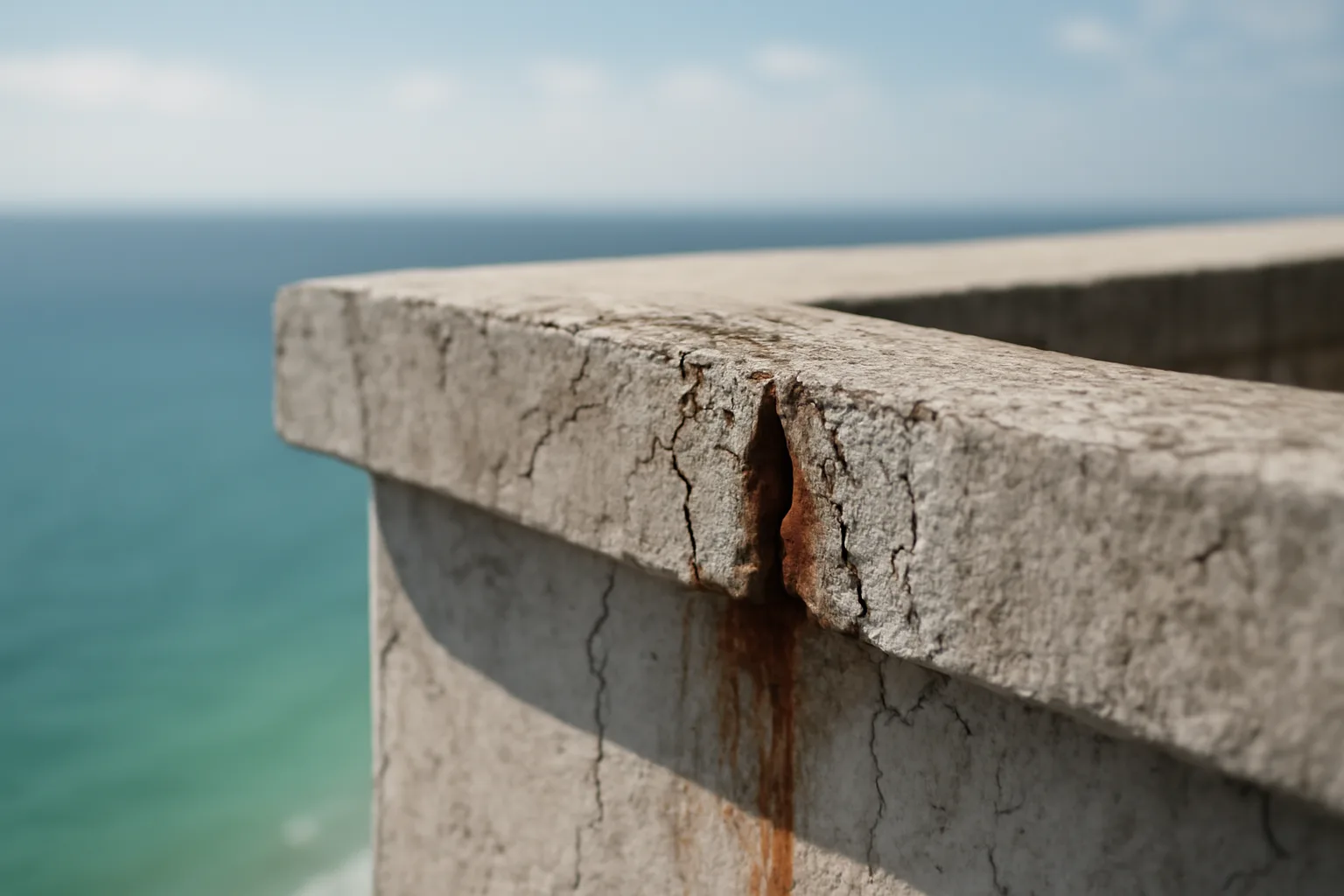
Phase 1 is a visual, non-invasive review by a licensed architect or engineer. They walk common areas, mechanical rooms, garages, balconies, and roof access points, looking for cracking, spalling concrete, rust staining, water intrusion, and other visible signs of structural distress. If Phase 1 finds no substantial structural deterioration, the inspector files a report and the building is done until the next 10-year cycle. Many buildings, especially newer or well-maintained ones, clear Phase 1 without moving to Phase 2. If Phase 1 does find substantial structural deterioration, the statute requires a Phase 2 inspection. That's where things get invasive and expensive: core sampling of concrete, testing of rebar corrosion, load calculations, sometimes removal of finishes to see what's behind them. Phase 2 is what generates the scary headlines about buildings needing tens of millions of dollars in repairs, because it's the phase that finds the real structural problems. Once the engineer completes the report, it goes to the board and to the local building official. The board is then required to distribute the inspector's report summary to unit owners, generally within 21 days of receipt [1].
How much does a milestone inspection cost?
Costs vary a lot by building size, height, and how much of the structure is accessible without demolition. Phase 1 inspections for a mid-size condo building commonly run somewhere in the low tens of thousands of dollars, though very large or tall towers can run higher. There's no statewide published fee schedule because pricing is set by private engineering and architecture firms, not the state, so get quotes from at least two or three licensed firms. Phase 2, if it's triggered, costs significantly more because of the invasive testing and follow-up structural analysis. Buildings that need Phase 2 sometimes see inspection-related costs climb into six figures before repair costs even enter the picture, though the actual number depends entirely on building size and what the engineer needs to test. None of these figures include the cost of any repairs the inspection turns up. A milestone inspection that finds "substantial structural deterioration" often becomes the trigger for a special assessment to pay for the fix. This is one reason boards should plan for milestone inspection cycles inside their overall reserve and budget planning, not treat it as a surprise line item.
What is a reserve study and how is it different from a milestone inspection?
A reserve study is a financial and physical assessment of a building's common elements, done to figure out how much money the association needs to save now so it can pay for future repairs and replacements without a surprise special assessment. It looks at things like roofs, paint, pavement, elevators, pools, and structural components, estimates their remaining useful life, and calculates how much should be funded annually into reserves [2]. A milestone inspection, by contrast, is purely a structural safety check. It doesn't tell you how much money to save. It tells you whether the building is structurally sound right now. Florida law actually requires both, and they work together. Florida's Structural Integrity Reserve Study (SIRS), created under Florida Statute 718.112, requires condo associations with buildings 3 stories or higher to study the reserve funding needs for specific structural components: roof, load-bearing walls, primary structural members, floor, foundation, fireproofing, electrical, plumbing, and waterproofing, among others [2]. Since 2025, most associations can no longer waive full funding of these SIRS reserve line items [2]. So think of it this way: the milestone inspection tells you if the building is safe. The SIRS tells you if you've saved enough money to keep it that way. For more on how the two connect, see our reserve study guide and our SIRS guide.
What is a reserve study for an HOA and does it work the same way?
A reserve study for an HOA works the same conceptual way as it does for a condo. A professional, often a reserve specialist, sometimes an engineer, inventories the shared components the association is responsible for maintaining, like roads, clubhouses, pools, and irrigation systems, and projects how much money needs to be set aside each year to replace them on schedule. The legal requirements differ, though. Florida's SIRS mandate under Chapter 718 applies to condominiums, and a related structural reserve requirement applies to cooperatives under Chapter 719. Standalone single-family HOAs generally aren't captured by the same structural reserve study statute, since that law is tied to buildings, not lots. That said, many HOAs choose to commission a reserve study voluntarily, because underfunded reserves are one of the most common reasons boards end up hitting owners with large, unplanned special assessments. See our HOA reserve study article for how HOAs, as opposed to condos, should approach this.
How much should an HOA or condo have in reserves?
There's no single dollar figure that applies to every association, because it depends entirely on the age, size, and components of your specific property. A community with a 20-year-old roof and a failing elevator needs a very different reserve balance than a 5-year-old building with all-new systems. The honest answer is: enough to cover the "fully funded" level identified in your reserve study, which is the amount needed so that, combined with ongoing contributions, the association can pay for each component's replacement without a special assessment when it wears out. Reserve professionals typically express this as a percentage. A reserve fund funded at 100% of the ideal balance for its components' age and condition is considered fully funded. Many associations nationally run in the 30 to 70% funded range, according to industry reserve studies conducted by firms like Association Reserves, which is a commonly cited (though not government-published) benchmark in the reserve specialist industry. For Florida condos specifically, the practical floor is now set by statute: as of the 2025 SIRS funding requirements under Section 718.112, associations generally cannot vote to waive or reduce reserve funding for the structural components identified in the SIRS [2]. That doesn't set a specific dollar amount, but it does remove the option many boards used for decades: underfunding reserves and hoping nothing breaks. If you're unsure where your building stands, get an actual reserve study done. Guessing is how associations end up with $30,000 special assessments landing on owners with six weeks' notice.
What is an HOA assessment and how does it differ from a special assessment?
An HOA assessment is the regular fee owners pay to the association to cover operating costs and reserve contributions, usually billed monthly, quarterly, or annually. It's set in the association's annual budget and is a normal, expected cost of owning in a community with shared amenities or structures. A special assessment is different. It's an additional, often one-time charge levied on top of regular assessments, usually because the association needs money for a repair or expense that reserves don't cover. Milestone inspection findings, storm damage, and insurance shortfalls are three of the most common triggers for special assessments in Florida right now. Boards generally have authority under the association's governing documents and Chapter 718 (for condos) to levy special assessments, but the process, notice requirements, and any caps depend on those governing documents and on Florida law. Confirm with your association's counsel exactly what notice period and vote (if any) your documents require before levying one. See our HOA special assessment guide for the mechanics.
Are HOA or condo special assessments tax deductible?
Generally, no, not for a typical owner-occupied unit. The IRS treats regular HOA and condo assessments, along with most special assessments, as a personal, nondeductible expense in the same category as home maintenance, similar to how you can't deduct a new roof on your primary residence [3]. There are exceptions. If you rent out the unit as investment property, special assessments related to repairs may be deductible as a rental business expense, and assessments tied to capital improvements may need to be added to your cost basis rather than deducted outright, according to IRS guidance on rental property expenses [3]. If a special assessment is specifically for casualty-loss repairs after a federally declared disaster, there may be a different tax treatment worth reviewing with a CPA. This is genuinely an area where a general article can't give you a verdict. Talk to a CPA who knows real estate before you assume either way. The IRS's own guidance on rental expenses, Publication 527, is the right starting point for owners who rent out their units [3].
What happens if a board doesn't do the milestone inspection on time?
Local building officials enforce the milestone inspection deadline, and they have real teeth. Under Section 553.899, if an association fails to complete a required inspection, the local enforcement agency can pursue code enforcement action, which can include fines that accrue daily until the association complies [1]. Beyond fines, there's a practical problem: mortgage lenders and title insurers have grown far more cautious since Surfside. Fannie Mae's Selling Guide sets project eligibility standards for condos, including requirements tied to significant deferred maintenance and unresolved structural issues, and buildings that don't meet those standards can become ineligible for standard financing, which tanks resale values and makes units hard to sell. A board that lets the deadline slide isn't just risking a fine. It's risking every owner's ability to sell or refinance. That's a much bigger problem than a citation. If your board has already missed a deadline, the move is simple: call a licensed engineer or architect and your county building department this week, not next quarter. Delinquency compounds. It doesn't fix itself.
How should a board actually plan for a milestone inspection and its aftermath?
Start earlier than feels necessary. Boards that treat the milestone inspection as a single event, rather than a multi-year process, are the ones that end up blindsided by a Phase 2 finding and a five-figure or six-figure special assessment with no warning to owners. A reasonable sequence looks like this: confirm your exact deadline with the county 12 to 18 months out, get competitive quotes from at least two or three licensed engineering firms, budget for the possibility of Phase 2 before you know you'll need it, and start talking to owners early about what a worst-case finding could cost. Pair the milestone inspection timeline with your SIRS cycle and your annual reserve study updates so the board isn't managing three separate deadlines with three separate spreadsheets. This is the kind of scheduling and communication work that eats a volunteer board's time, not because the decisions are hard, but because there are a lot of moving deadlines to track across statutes, county rules, and vendor contracts. That's the specific gap our $199 one-time Board Compliance Kit is built to close: it organizes your building's specific milestone and SIRS deadlines, tracks vendor documentation, and gives the board a communication plan for owners, all built around your building's age, height, and coastal zone. It doesn't replace your engineer, your reserve specialist, or your attorney, and it doesn't issue any compliance verdict about your building. Those calls need licensed professionals and your association's own counsel.
Where can I find the actual statute and my county's building department?
Start with the primary source. Florida Statute 553.899, governing milestone inspections, is published in full on the Florida Legislature's official site, flsenate.gov [1]. The related SIRS reserve requirements live in Section 718.112 of the Condominium Act, also on flsenate.gov [2]. For licensing verification of the architect or engineer your board hires, DBPR's license search lets you confirm the professional is actually licensed in Florida and in good standing. Never hire based on a business card alone. Verify the license. Your county or city building department is the enforcement authority for your specific deadline and any local ordinance variations. Miami-Dade County, for example, ran its own 40-year and 50-year building recertification program under its county code before the statewide law existed, and that local rule still layers on top of the state minimum. Call before you assume the state deadline is the only one that applies to you.
Frequently asked questions
What is a milestone inspection?
It's a state-mandated structural inspection of Florida condo and co-op buildings 3 stories or taller, performed by a licensed architect or engineer under Florida Statute 553.899. It checks the building's structural integrity, not its finishes or systems, and can trigger a more invasive Phase 2 inspection if problems show up in the initial visual review.
What is a reserve study?
A reserve study is a professional assessment of an association's shared components (roofs, elevators, pavement, structural elements) that estimates remaining useful life and calculates how much money the association needs to save annually to replace those components without a surprise special assessment.
What is a reserve study for an HOA?
For an HOA, a reserve study inventories shared assets like roads, clubhouses, and pools, and projects funding needs to replace them over time. Standalone single-family HOAs aren't covered by Florida's SIRS structural reserve mandate, which is written around condo buildings, but many still get a reserve study voluntarily to avoid underfunding.
What is an HOA assessment?
An HOA assessment is the regular fee owners pay, monthly or annually, to fund the association's operating budget and reserves. It's separate from a special assessment, which is an added, often one-time charge for a specific unplanned expense like storm damage or a milestone inspection repair.
What are HOA assessments used for?
Regular assessments cover day-to-day operating costs (landscaping, insurance, management fees) and reserve contributions for future big-ticket repairs. Special assessments cover shortfalls or unplanned costs, like a milestone inspection finding structural deterioration that reserves weren't funded to cover.
How much should an HOA have in reserves?
There's no universal dollar figure. The target is whatever your reserve study identifies as "fully funded" for your specific components and their age. Florida condos now face a statutory floor for SIRS-covered structural items under Section 718.112, which limits the ability to waive full funding starting in 2025.
How much does a reserve study cost?
Costs vary by building size and complexity. Small to mid-size associations often pay in the low thousands of dollars for a reserve study, while larger, more complex buildings with more components can pay more. Get quotes from a few licensed reserve specialists or engineers before hiring.
Are HOA or condo special assessments tax deductible?
Generally no, for a personal residence. The IRS treats them as a nondeductible personal expense. Exceptions can apply to rental properties, where repair-related assessments may be deductible and capital-improvement assessments may adjust cost basis. Confirm with a CPA, per IRS Publication 527 guidance.
When is a milestone inspection due in Florida?
Buildings within 3 miles of the coast need their first milestone inspection by the end of the year they turn 25. Buildings farther than 3 miles from the coast get until age 30. After the first inspection, it repeats every 10 years, per Florida Statute 553.899.
Does a milestone inspection apply to single-family HOA homes?
No. Florida's milestone inspection law under Section 553.899 applies to condominium and cooperative buildings 3 stories or higher, not single-family, duplex, or triplex homes. Standalone HOA communities of single-family homes generally fall outside this specific requirement, though check with counsel for mixed-use developments.
What is the difference between a milestone inspection and a SIRS?
A milestone inspection checks whether the building is structurally safe right now. A Structural Integrity Reserve Study (SIRS), under Section 718.112, checks whether the association has saved enough money to fund future repairs to those same structural components. Florida requires both for qualifying condo buildings.
What happens if my building fails the milestone inspection?
There's no formal "pass or fail." If the Phase 1 visual review finds substantial structural deterioration, the statute requires a more invasive Phase 2 inspection. Depending on Phase 2 findings, the board may need to commission repairs, often funded through a special assessment, and file updates with the local building official.
Who pays for the milestone inspection and any repairs it finds?
The association pays, typically drawn from reserves if funded, or through a special assessment if reserves are short. Costs are then billed to owners according to the association's governing documents, usually based on unit percentage or ownership share as defined in the declaration.
Sources
- Florida Senate, Florida Statute 553.899 (Milestone Inspections): Milestone inspection requirements, deadlines, Phase 1/Phase 2 process, and enforcement authority
- Florida Senate, Florida Statute 718.112 (Condominium reserve and SIRS requirements): Definition and structural component list for Structural Integrity Reserve Studies
- IRS, Publication 527, Residential Rental Property: Tax treatment of assessments for rental versus personal-use property
- NIST, National Construction Safety Team Act investigation report NCSTAR 1, Champlain Towers South collapse: Federal investigation into the structural causes of the Champlain Towers South collapse that prompted the 2022 statutory changes
- Florida Senate: Florida law requires homeowners' associations to complete a reserve study or structural integrity reserve study for certain buildings.
- Florida Senate: Definitions under the Florida Condominium Act, including terms relevant to condominium associations and assessments.
- Florida Department of Business and Professional Regulation (DBPR): The DBPR provides guidance and requirements for milestone inspections of condominium and cooperative buildings in Florida.
- Internal Revenue Service: IRS guidance on deductibility of certain home-related expenses relevant to whether HOA or condo assessments qualify as deductible.
- Florida Senate: Statutory provisions governing condominium association board responsibilities and transition of control relevant to milestone inspection compliance.