Last updated 2026-07-25
TL;DR
Florida condo recertification means two separate legal duties: milestone structural inspections at 25 or 30 years (Fla. Stat. 553.899), and Structural Integrity Reserve Studies (SIRS) that force full reserve funding starting with fiscal year 2025 budgets (Fla. Stat. 718.112). Miss either one and your board faces liability, insurance problems, and possible special assessments.
What does "condo recertification" actually mean in Florida?
There's no single Florida law called "condo recertification." That's a nickname people use for a package of overlapping requirements that came out of the 2021 Champlain Towers South collapse in Surfside, which killed 98 people. The state responded with SB 4-D in 2022 and follow-up cleanup bills in 2023 and 2024, and those laws created two distinct obligations for condo and cooperative buildings three stories or taller: milestone structural inspections and Structural Integrity Reserve Studies (SIRS) [1]. Boards get these confused constantly, and it matters because they run on different clocks and different rules. A milestone inspection is a physical, licensed-engineer inspection of the building's structure. A SIRS is a reserve funding study that looks at specific structural components and forces the association to save real money for them, with no more waiving or underfunding those particular reserve lines. You can pass a milestone inspection and still be way behind on SIRS compliance, or vice versa. Some local governments, mainly Miami-Dade and Broward County, also run their own older 40-year and 50-year recertification programs that predate the state law and still apply on top of it [2]. If your building is under three stories, single-family, or a timeshare, most of this doesn't apply to you the same way. Ch. 718 SIRS and the milestone inspection statute (553.899) both key off "buildings that are three stories or more in height" [1] [3]. Duplexes and small residential structures other than condos are generally excluded from the milestone statute too. Always confirm your building's exact status with your association's counsel and your county building department, since local ordinances can be stricter.
When is a milestone inspection required?
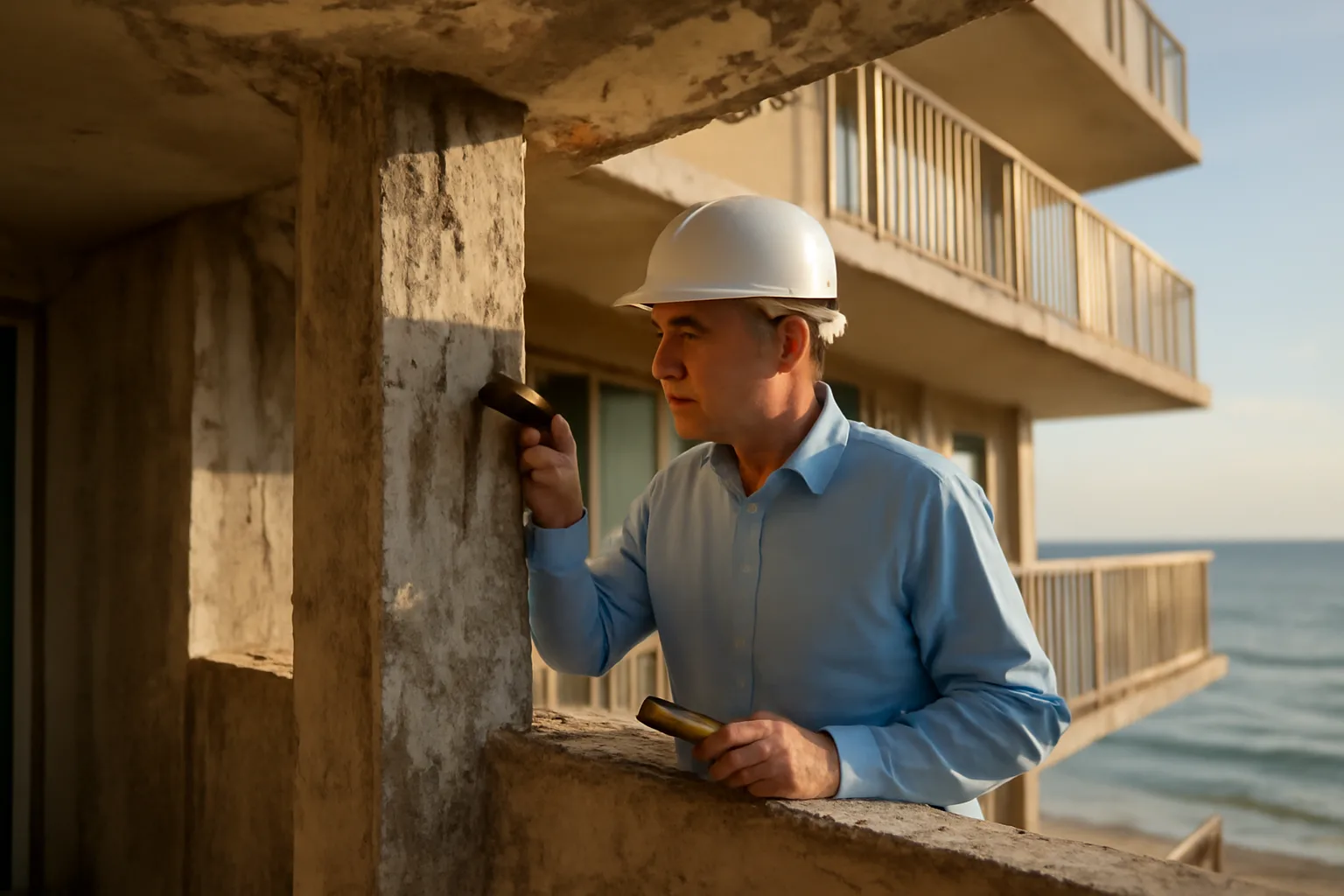
A milestone inspection is required by December 31 of the year a condo or cooperative building reaches 30 years old, and every 10 years after that. If the building is within three miles of the coastline, the first inspection moves up to age 25, again every 10 years after [3]. Local building officials can also require an inspection earlier if they have reason to believe the building has structural problems. Florida Statute 553.899 spells out a two-phase process. Phase 1 is a visual examination by a licensed architect or engineer, who looks for "substantial structural deterioration" in load-bearing elements. If Phase 1 turns up nothing concerning, you're done until the next 10-year cycle. If the inspector finds signs of distress, cracking, spalling, corrosion, whatever suggests a real structural issue, the building moves to Phase 2, which means a more invasive inspection: opening up walls, testing materials, the works [3]. The statute requires the inspector to submit a sealed report to the local building official, and that report has to include a summary of the findings along with recommended repairs and a timeline. Boards are required to distribute that report to unit owners, and it becomes part of the association's official records under Ch. 718 [1] [3]. Cost varies a lot by building size and age. Phase 1 inspections commonly run somewhere in the low five figures for a mid-size condo, but there's no statewide fee schedule and DBPR doesn't publish standardized cost data, so get quotes from multiple licensed firms rather than trusting a single number you saw online. If your building lands in Phase 2, costs go up meaningfully because you're paying for destructive testing and follow-up engineering work, more than a walkthrough.
What is a SIRS (Structural Integrity Reserve Study)?
A SIRS is a reserve study focused specifically on structural components, and it's what people mean when they ask "what is a reserve study for HOA" in the Florida condo context, though technically SIRS applies to condos and cooperatives under Ch. 718 and 719, not to HOAs under Ch. 720 (more on that gap below). It has to be performed by a licensed engineer or architect and must cover, at minimum, the roof, load-bearing walls and other primary structural members, floors, foundation, fireproofing and fire protection systems, plumbing, electrical systems, waterproofing and exterior painting, and windows and exterior doors [1]. For each of those components, the SIRS has to state the remaining useful life and the estimated cost to repair, replace, or maintain it. That data then feeds directly into the association's reserve budget. Starting with fiscal year 2025 budgets, associations subject to SIRS can no longer waive or reduce reserve funding for those specific line items, and they can't pool them together the way many associations used to pool general reserves [1]. Every dollar the study says you need for the roof has to actually go into a roof reserve line. The original deadline for buildings to complete their first SIRS was December 31, 2024, for condos reaching three stories and 30 years old (or 25 if coastal) by that date. The legislature has adjusted timing and phase-in details more than once since 2022, including 2023's SB 154 and 2024's HB 1021, so if your building hasn't completed its SIRS yet, check the current statute language and talk to counsel about where your specific deadline actually landed [1] [4].
What is a reserve study, generally, and how is SIRS different?
A reserve study, in the general sense, is a professional assessment of an association's shared components (roofs, pavement, pools, elevators, HVAC, structural elements, whatever the property has) that estimates each component's remaining life and the cost to repair or replace it, then builds a funding plan so the association isn't blindsided by a huge bill. That's true for both a Ch. 720 HOA's voluntary study and a condo's Ch. 718 SIRS process. See our reserve study explainer for the full walkthrough of the process, and hoa reserve study if you're specifically in a homeowners association rather than a condo. SIRS is a narrower, mandatory subset that Florida law created just for condos and co-ops three stories and up. A general reserve study can cover the pool deck, landscaping, painting schedules, whatever the board wants studied. A SIRS only covers the specific structural and life-safety components listed in the statute, and unlike a voluntary reserve study, its funding recommendations for those items aren't optional once your board adopts a budget for fiscal year 2025 or later [1]. Here's the distinction that trips people up: Florida HOAs under Ch. 720 are NOT currently required to do a SIRS. That requirement sits in Ch. 718 (condos) and Ch. 719 (cooperatives). HOA boards still have general reserve and disclosure obligations under 720.303, but the SIRS mandate specifically targets condo and co-op buildings. If you're on an HOA board wondering whether SIRS applies to you, the short answer for most single-family HOA communities is no, though always confirm with counsel since some HOAs include high-rise condo-style buildings.
How much does a reserve study cost?
For a standard voluntary reserve study (not a SIRS), industry sources commonly cite ranges from roughly $3,000 to $10,000 or more depending on the number of components, the size of the property, and whether it's a "full" study with an on-site visual inspection versus an "update" study. There's no Florida-specific statutory fee schedule, and costs vary by region and by how many buildings and shared elements the reserve preparer has to inventory. A SIRS, because it has to be performed by a licensed architect or engineer and dig into structural specifics, tends to run higher than a basic reserve study, especially for larger or older buildings, or ones that already flagged issues in a milestone inspection. Get at least two or three quotes from Florida-licensed firms and ask specifically whether the quote covers a full SIRS meeting the Ch. 718 component list, not a generic reserve study that a firm is relabeling. Boards sometimes try to save money by skipping the study or doing a stripped-down version. That's a bad trade. An underfunded or missing SIRS doesn't just create legal exposure, it means your board is guessing at multi-million-dollar structural costs instead of budgeting for them, which is exactly the failure mode the 2022 law was written to close.
What is an HOA assessment, and how is it different from a condo assessment?
An assessment, in either an HOA or a condo association, is a mandatory charge the association levies against unit or lot owners to pay for common expenses. Regular assessments cover the operating budget and reserve contributions and usually get billed monthly or quarterly. A special assessment is an extra, often one-time charge for something the regular budget doesn't cover, a new roof, storm damage repair, or a structural fix flagged by a milestone inspection or SIRS. What are HOA assessments used for specifically? Under Ch. 720, HOA assessments fund common area maintenance, insurance, reserves (where the association has chosen to fund them), and shared amenities like gates, pools, or clubhouses. Condo assessments under Ch. 718 work the same way structurally but often carry a heavier reserve component because condos own and maintain building structures, roofs, and life-safety systems that most single-family HOAs don't. For a full breakdown of how special assessments get levied, noticed, and challenged, see hoa special assessment. If your board is staring down a big structural repair bill from a milestone inspection, our condo special assessment insurance piece covers whether insurance proceeds can offset the assessment amount, which matters a lot after storm-related structural findings.
How much should an HOA (or condo) have in reserves?
There's no single dollar figure or percentage that Florida law requires generally; the honest answer is "whatever your reserve study says you need for your specific components," and for SIRS-covered items in condos, that number is no longer optional starting with FY2025 budgets [1]. Some industry guidance suggests funding reserves to at least 70% of "fully funded" status (meaning reserves roughly match the ideal balance given component ages) as a reasonable target, but that's a common industry benchmark, not a Florida statutory minimum, so don't cite it to your board as law. What matters more than a percentage is whether your reserve schedule actually lines up with your reserve study's component-by-component projections. A board that's "fully funded" on paper but hasn't updated its study in eight years is not actually in good shape; components age, materials fail faster near salt air, and construction costs have climbed sharply since 2020. For condos specifically, remember the SIRS floor: for roof, structure, waterproofing, electrical, plumbing, and the other statutory components, the association must reserve at the level the SIRS calculates, full stop, no board vote to waive it [1]. General (non-SIRS) reserve items can still be waived or reduced by a majority vote of the unit owners at a meeting, subject to the specific procedural rules in 718.112(2)(f).
Are HOA or condo special assessments tax deductible?
Generally, no, not for an individual owner's personal residence. The IRS treats special assessments the way it treats regular HOA dues for a personal residence: as a nondeductible personal living expense, similar to how home repairs on your own house aren't deductible. The IRS's guidance on rental property expenses (Publication 527) draws the relevant distinction: if the unit is a rental property, HOA fees and special assessments for repairs and maintenance are generally deductible as rental expenses, while assessments for capital improvements to a rental property may need to be capitalized and depreciated rather than deducted immediately [5]. So the honest answer depends entirely on whether the unit is your home or a rental, and even for rentals, whether the assessment is for a repair (deductible currently) or an improvement (depreciated over time). This isn't tax advice specific to your situation; talk to a CPA who knows real estate, especially if a milestone-inspection-driven special assessment is large enough to matter on your return.
What happens if a board misses a milestone inspection or SIRS deadline?
Local building officials enforce milestone inspection deadlines, and enforcement mechanisms vary by county but can include code enforcement fines and, in serious cases, orders affecting occupancy. Because 553.899 requires the inspection report to go to the local building official, missing the deadline is visible to the jurisdiction, not something a board can quietly let slide [3]. On the SIRS side, the exposure is less about a fine and more about the reserve-funding mandate itself: once your first SIRS is done, the association legally can't underfund those specific reserve lines in future budgets, and failing to have a current SIRS at all leaves the board unable to show it met its statutory obligation, which creates real liability exposure in the event of a structural failure or a unit owner lawsuit over funding decisions [1]. Boards should also know that Ch. 718 imposes recordkeeping and disclosure duties tied to both the milestone report and the SIRS; failing to maintain or produce those records to owners on request is a separate compliance problem layered on top of the inspection and funding issues [1]. If your building already has reserve waivers on the books from prior years, or you're wondering whether relief provisions apply to your specific timeline, our florida condo reserve fund relief article walks through what's changed and what hasn't.
How do milestone inspections and SIRS interact with the reserve study process?
Think of it as a pipeline. The milestone inspection tells you the physical condition of the structure right now: is there deterioration, does anything need Phase 2 investigation, what's the engineer's opinion of remaining service life on major elements. The SIRS takes a longer view: for each statutory component, what's the remaining useful life, and how much does the association need to save, per year, to pay for eventual repair or replacement without a shock special assessment. In practice, a milestone inspection finding often becomes an input to the SIRS, and vice versa; if your milestone inspector flags advanced corrosion on a rebar system, that finding should show up in the SIRS's remaining-useful-life estimate for that structural component and change the funding math immediately, not at the next scheduled study update. Boards that treat these as two disconnected paperwork exercises, run by different vendors who never talk to each other, tend to end up with numbers that don't reconcile and a board that can't answer basic owner questions about what's actually being saved for what. This is one area where a reserve study for condo association run in coordination with your milestone inspection timeline saves real money and real headaches later, since you can time the studies to build off each other's engineering data rather than paying twice for overlapping site visits.
What should a board actually do first?
Start with your building's age and coastal distance, since that determines your milestone inspection trigger date under 553.899, and confirm it against your county building department's records, more than your own guess [3]. Then check whether your association has completed a SIRS meeting the Ch. 718 component list; if it hasn't, that's the more urgent gap given the FY2025 reserve-funding trigger [1]. From there, get the paperwork organized: prior inspection reports, engineering letters, reserve schedules, and board meeting minutes where funding decisions got made, all need to be in one place and producible to owners on request, since Ch. 718 treats these as official association records. A lot of boards lose time (and legal exposure) simply because the milestone report from three years ago is on a former board member's laptop. This is exactly the gap our $199 Building-Specific Board Compliance Kit at /board-kit-builder is built to close: it organizes your building's specific deadlines, tracks which inspections and studies are done versus outstanding, and gives the board a communication template for owners. It doesn't replace your licensed engineer or reserve preparer, and it doesn't tell you whether your building is legally compliant; only your association's counsel and the licensed professionals doing the actual inspections and studies can say that. What it does is make sure nothing falls through the cracks between them.
Frequently asked questions
What is a reserve study?
A reserve study is a professional evaluation of a property's shared components (roofs, elevators, pavement, structural elements) that estimates each item's remaining useful life and the cost to repair or replace it, then builds a savings plan so the association can pay for those costs without a surprise special assessment. It's typically updated every few years.
What is a reserve study for an HOA?
For a Florida HOA under Ch. 720, a reserve study works the same way as any other association's study: it inventories shared components, estimates remaining life and replacement cost, and recommends annual contribution levels. Unlike condo SIRS, HOA reserve funding generally isn't mandated by state statute unless the HOA's own governing documents require it.
What is an HOA assessment?
An HOA assessment is a mandatory charge the association bills to owners to cover common expenses: operating costs, insurance, reserves, and shared amenities. Regular assessments are recurring (monthly or quarterly); special assessments are one-time charges for unbudgeted costs like storm repairs or a structural fix identified by an inspection.
How much should an HOA have in reserves?
There's no single statewide dollar figure; the right amount is whatever the association's reserve study calculates for its specific components and their ages. Industry guidance sometimes cites 70% funded as a reasonable benchmark, but that's not a Florida statutory requirement outside the condo SIRS components covered by Ch. 718.
How much does a reserve study cost?
A standard voluntary reserve study commonly runs from roughly $3,000 to $10,000 or more depending on property size and component count, though there's no statewide fee schedule. A SIRS, which must be done by a licensed engineer or architect and covers specific structural components, tends to cost more, especially for larger or older buildings.
Are HOA special assessments tax deductible?
Generally no, for a personal residence, similar to how home repairs aren't deductible. If the unit is a rental property, the IRS's Publication 527 allows deducting special assessments tied to repairs and maintenance as rental expenses, though assessments for capital improvements may need to be depreciated instead. Talk to a CPA about your specific situation.
What is a milestone inspection in Florida?
A milestone inspection is a state-mandated structural inspection required for condo and cooperative buildings three stories or taller, due by the year the building turns 30 (or 25 if within three miles of the coast), and every 10 years after. It's a two-phase process under Fla. Stat. 553.899, starting with a visual exam by a licensed architect or engineer.
What is a SIRS and who has to do one?
A Structural Integrity Reserve Study (SIRS) is a mandatory Florida study for condo and cooperative buildings three stories or higher, covering the roof, load-bearing elements, plumbing, electrical, waterproofing, and windows/doors. It must be done by a licensed engineer or architect and directly sets mandatory reserve funding levels for those components starting with FY2025 budgets.
Do HOAs have to do a SIRS?
No, not under current Florida law. The SIRS mandate sits in Ch. 718 (condominiums) and Ch. 719 (cooperatives), not Ch. 720, which governs most homeowners associations. Some communities with condo-style buildings inside an HOA structure should confirm with counsel whether any building on the property triggers Ch. 718 obligations.
What happens if a condo building fails a milestone inspection?
There's no formal "pass or fail" in the inspection itself; if Phase 1 finds signs of structural distress, the building moves to Phase 2, a more invasive inspection with material testing. The engineer's report goes to the local building official along with repair recommendations and a timeline, which the association is obligated to act on and disclose to owners.
How often do milestone inspections need to be repeated?
Every 10 years after the initial inspection, which is required by the year the building turns 30 (25 if within three miles of the coastline), under Fla. Stat. 553.899. Local building officials can also require an inspection sooner if they believe the building shows signs of structural distress.
Can a condo association still waive SIRS-related reserves?
No. For the specific structural components covered by a completed SIRS (roof, load-bearing elements, plumbing, electrical, waterproofing, etc.), Ch. 718 no longer allows the board or owners to waive or reduce funding starting with fiscal year 2025 budgets. Non-SIRS reserve items can still be waived by a unit owner vote under the procedures in 718.112(2)(f).
Where can I find my building's milestone inspection or SIRS report?
These reports are part of the association's official records under Ch. 718 and must be made available to owners on request. Boards typically keep them with the association's management company or in board meeting archives; some counties, like Miami-Dade and Broward, also maintain their own recertification files.
Sources
- Florida Senate, Florida Statutes Ch. 718.112 (Structural Integrity Reserve Study and reserve funding): SIRS component list, mandatory reserve funding starting FY2025, and restrictions on waiving SIRS-covered reserves
- Miami-Dade County Code of Ordinances, Sec. 8-11(a) (Recertification of buildings): Miami-Dade's local 40-year/50-year recertification program predates and operates alongside the state milestone inspection law
- Florida Senate, Florida Statutes 553.899 (Milestone inspections): Milestone inspection age thresholds (30 years, or 25 if within three miles of coastline), two-phase inspection process, and reporting to local building officials
- Florida Senate, HB 1021 (2024): 2024 legislative adjustments to SIRS and milestone inspection timing and phase-in requirements
- Internal Revenue Service, Publication 527, Residential Rental Property: HOA fees and special assessments for repairs on rental property are generally deductible as rental expenses; assessments for capital improvements may need to be depreciated